
What if 87% of people have had an experience science doesn’t know what to do with?
That was the finding that stayed with me long after I finished writing my psychology dissertation. Not a fringe number. Not a handful of outliers. Nearly nine in ten people in my study reported having had at least one anomalous experience in life.
Anomalous experiences are things that happen to people – a dream that predicts the future, a feeling that someone is about to call, a sense of presence no one else perceives – that don’t fit the frameworks we currently use to explain how the mind and world work.
My bachelor’s dissertation was focused on what researchers call extra-sensory-motor experiences: things like precognitive dreams, telepathic impressions, or a sense of knowing something before it happens.
The goal wasn’t to prove or disprove whether psi is real. That’s a different conversation, and honestly, not the most useful one.
The question I was more interested in was simpler: what happens to people who have these experiences? How do they make sense of them? Do they tell anyone? And does having them change something about how they see life?
The answers were more striking than I expected.
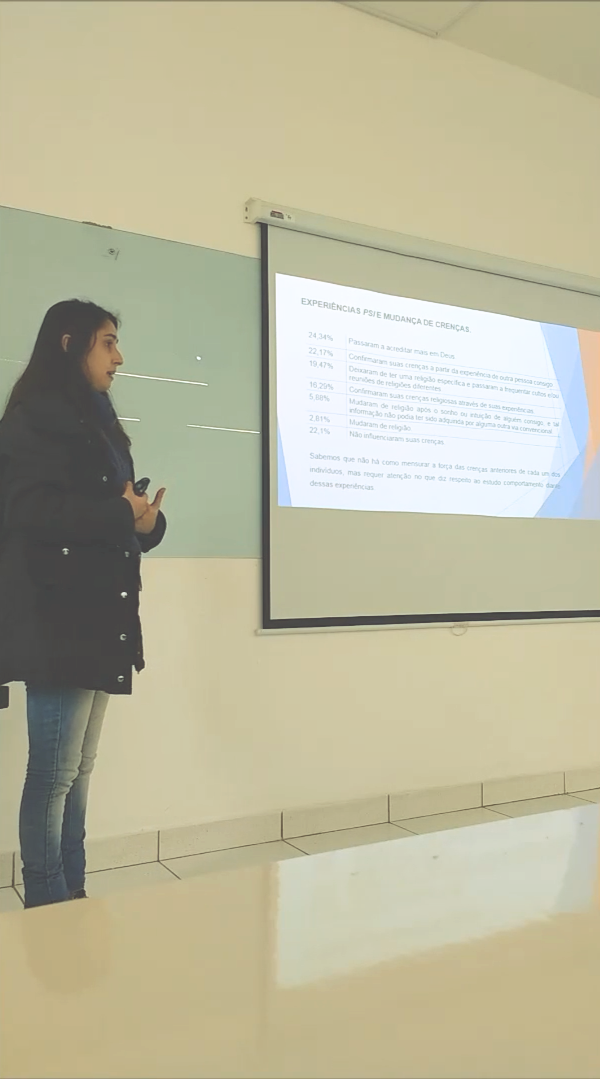
More than half of the participants (57.76%) reported having had at least one precognitive dream. That’s not a curiosity. That’s a pattern worth paying attention to. Sleep, it turns out, may be where anomalous experience is most likely to happen, which opens up questions that research has barely begun to explore.
Nearly half said they liked to talk about their experiences with friends or family. Which tells you something important: people aren’t hiding these things because they find them unimportant. They’re hiding them, when they do, because they’re afraid of how they’ll be received.
And 18.91% said these experiences had genuinely changed how they understood life and its meaning. That’s not a trivial number of people walking around with something significant that their psychologist may never ask about.
This is where the research felt most urgent to me, not as an academic exercise, but as a clinical one.
When a patient describes an experience that doesn’t fit conventional frameworks, there’s a risk. An undertrained or incurious clinician might reach for a diagnostic label that doesn’t fit. The difference between a pathological experience and an anomalous one matters enormously, and it’s a distinction the field often fails to make.
Attitudes shape everything here. The way a professional responds to a patient’s account of a psi experience will determine whether that person ever brings it up again. Whether they feel seen. Whether they get the right kind of help.
I was drawn to this topic because it sits at the edge of what psychology considers acceptable to study. Anomalous experiences are, by definition, poorly understood. They’re also, by the data, extremely common. That gap, between how often they happen and how rarely they’re taken seriously, seemed like exactly the kind of problem worth spending a dissertation on.
I didn’t leave with all the answers. I left with better questions, and a stronger conviction that mental health professionals need to be equipped to meet people where they actually are, not just where the textbooks expect them to be.
Because the experiences keep happening. Whether we study them or not.


Leave a Reply