
I didn’t move to the UK to find myself. I moved to build something, a career, a life, a version of stability that felt impossible to picture from where I was standing in Brazil. I was early in my career, still figuring out who I was professionally, and somehow I thought a new country would make that easier.
It didn’t. It made it more complicated. And more interesting. And, eventually, more mine.
The first thing I lost when I arrived wasn’t comfort or familiarity. It was fluency. Not just in the language (though yes, that too), the exhaustion of translating yourself in real time, of laughing a second too late at a joke, of choosing between sounding correct and sounding like yourself. What I mean is professional fluency.
The invisible grammar of a workplace: how to disagree without offending, when to speak up and when to hold back, what counts as ambition and what reads as pushiness.
In Brazil, I knew those rules. Here, I was learning them on the job – literally – while also trying to do the job itself.
I worked across different industries before landing in HR. Each one handed me a different mirror. In some rooms, my accent was the first thing people noticed and the last thing they forgot. In others, I was underestimated in ways so quiet I almost didn’t notice, until I did, and couldn’t stop noticing.
What shifts you, over time, isn’t one big moment. It’s the accumulation of small decisions about who you’re willing to be at work when the context isn’t built for you.
Do you soften yourself to fit? Do you perform a version of confidence you haven’t quite earned yet? Do you let your accent become something you apologise for, or do you decide, one ordinary Tuesday, that you’re done apologising?
I did all of those things. Sometimes in the same week.
My identity at work didn’t evolve in a straight line. It moved sideways, sometimes backwards, often in ways I only understood in retrospect. The immigrant professional doesn’t just navigate systems, she negotiates her own sense of self inside them. Quietly. Constantly.
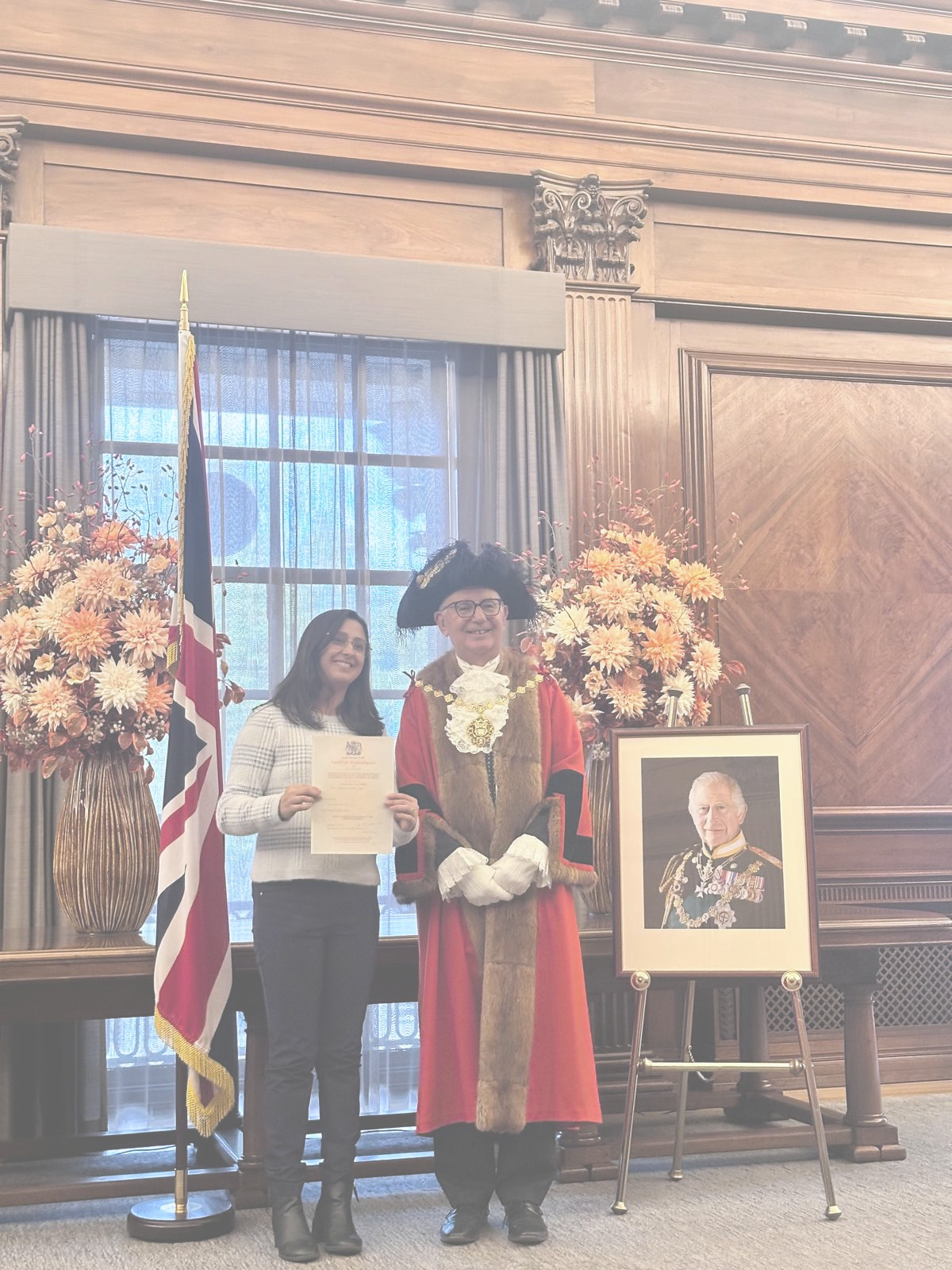
Getting British citizenship wasn’t just a bureaucratic milestone. I want to be careful not to overstate it, it’s a document, a status, a set of rights. But it also arrived after years of that quiet negotiation, and so it landed with more weight than I expected.
Standing there, having completed the process, I didn’t feel like I had finally become British. I felt like I had finally stopped needing to prove that I belonged somewhere. There’s a difference. Belonging, I’ve learned, is something you build inside yourself long before any institution confirms it.
If you’re somewhere in the middle of this journey, new country, new workplace, still translating yourself, I want to say something honest to you.
The identity shifts are not a problem to solve. They’re the work.
You are going to become someone your original self wouldn’t entirely recognise, and that’s not a loss. Some of the best things about who I’m professionally came directly from having to build myself in unfamiliar soil.
You don’t have to choose between where you’re from and where you’re living.
You get to be both.


Leave a Reply